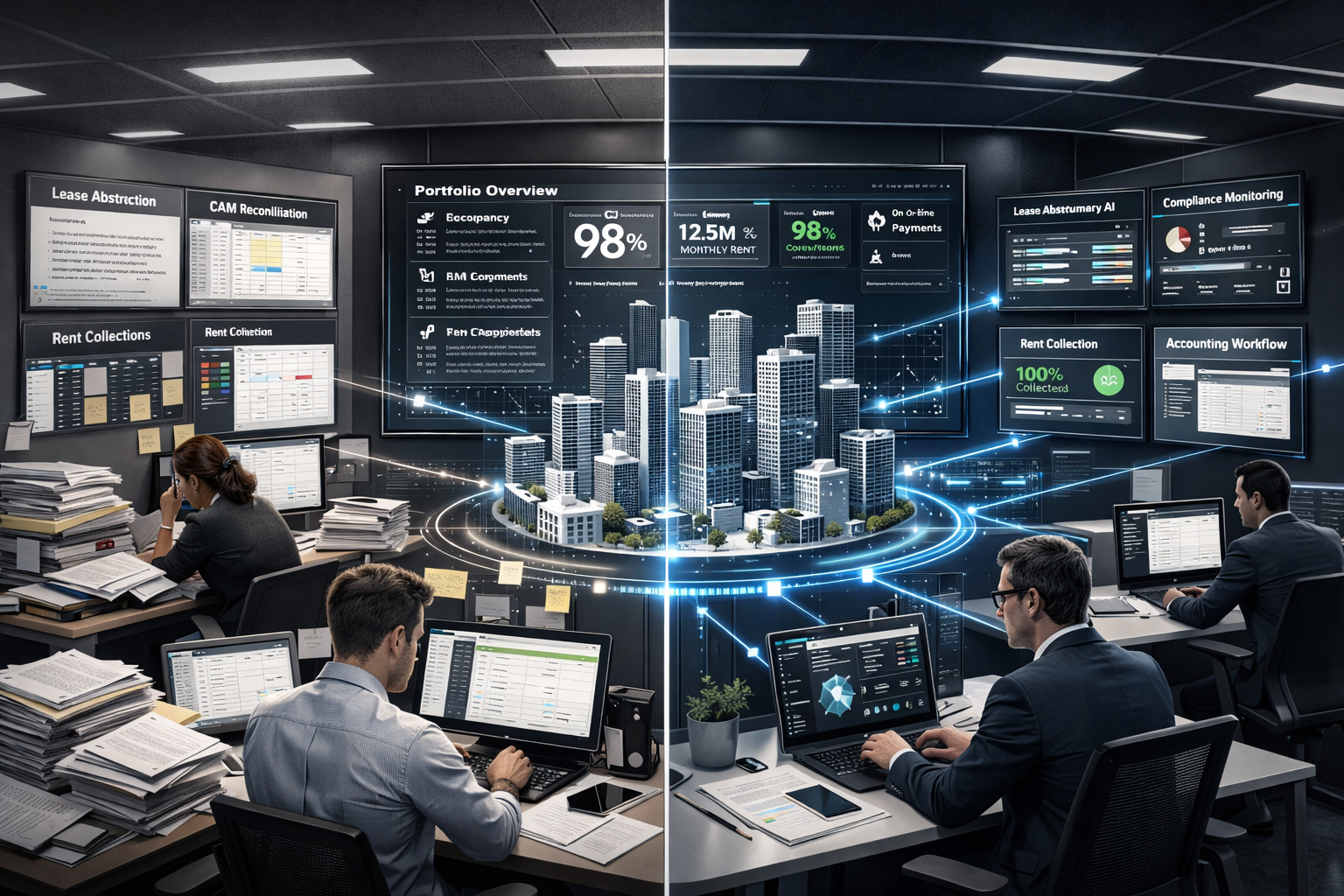
Commercial real estate is entering a new era defined by intelligence, automation, and operational efficiency.
At the center of this transformation is autonomous asset management—a model where technology handles repetitive, data-heavy, and time-sensitive real estate operations with minimal human intervention.
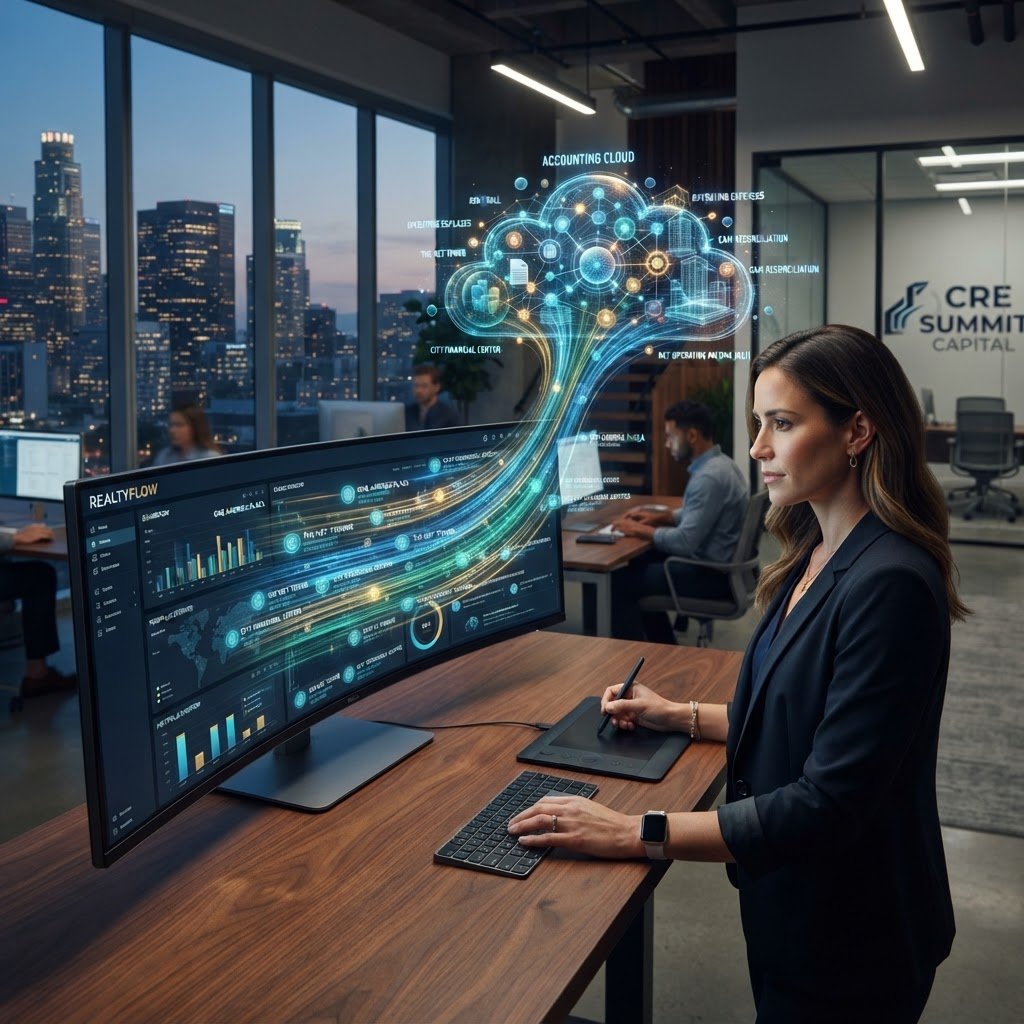
From lease administration to property accounting, CRE organizations are rapidly adopting CRE technology automation to streamline workflows, reduce costs, and improve decision-making.
What Is Autonomous Asset Management?
Autonomous asset management refers to the use of advanced technologies—particularly AI and automation—to manage commercial real estate operations with reduced manual effort.
It transforms traditional processes such as:
into automated, data-driven workflows that operate continuously and accurately.
Instead of manually processing documents and spreadsheets, teams rely on systems that extract, structure, and analyze real estate data in real time.
The Role of AI in Modern Lease Administration
One of the most impactful advancements in CRE automation is AI-powered lease abstraction.
Traditional lease abstraction requires manual review of complex legal documents, often leading to delays and inconsistencies.
AI transforms this process by:
Extracting Key Lease Data Automatically
AI systems can identify and structure critical lease elements such as rent schedules, escalation clauses, renewal options, and tenant obligations.
Improving Accuracy and Consistency
Automation reduces human error, ensuring that lease data remains reliable across large and complex portfolios.
Enabling Real-Time Updates
When lease documents change, AI systems can instantly update structured data, improving visibility and compliance tracking.
This fundamentally improves how organizations manage lease portfolios at scale.
1. Enhanced Operational Efficiency
Automation eliminates repetitive manual tasks, allowing teams to focus on strategic activities such as portfolio optimization, tenant engagement, and investment planning.
CRE technology automation significantly reduces time spent on document processing, reporting, and reconciliation workflows.
2. Cost Reduction
While technology adoption requires investment, automation reduces long-term operational costs by minimizing manual labor, reducing errors, and improving process efficiency.
Integration with platforms like Yardi support services further enhances operational scalability and financial control.
3. Improved Tenant Experience
Faster response times and accurate data management lead to better tenant communication and satisfaction.
Automated systems streamline:
- Maintenance requests
- Billing inquiries
- Lease communication
- Dispute resolution
This improves tenant retention and strengthens landlord relationships.
Core Pillars of Autonomous Asset Management
Lease Compliance Consulting
Ensuring lease compliance is critical in commercial real estate.
Automated systems combined with lease compliance consulting help organizations:
- Track obligations and deadlines
- Reduce compliance risk
- Improve audit readiness
- Ensure regulatory adherence
Commercial Lease Administration
Modern commercial lease administration relies on automation to track critical dates, manage renewals, and monitor lease performance across portfolios.
This reduces missed opportunities and improves asset optimization.
CAM Reconciliations
CAM reconciliations are often complex and time-consuming.
Automation simplifies this process by:
- Comparing actual vs budgeted expenses
- Identifying discrepancies quickly
- Reducing tenant disputes
- Improving financial transparency
Property Management Consulting
As technology becomes central to real estate operations, property management consulting is evolving to focus on digital transformation and automation strategy.
Consultants now help firms:
- Select the right technology stack
- Implement automation workflows
- Optimize operational processes
- Improve data-driven decision-making
Challenges in Adopting Autonomous Systems
Despite its benefits, transitioning to autonomous asset management comes with challenges.
Resistance to Change
Employees may be hesitant to adopt automation due to concerns about job roles or workflow disruption. Proper training and change management are essential for successful adoption.
Initial Technology Investment
Upfront costs can be a barrier, especially for smaller firms. However, long-term efficiency gains and cost savings typically outweigh initial investments.
How to Successfully Transition to Autonomous Asset Management
1. Conduct a Process Audit
Identify inefficiencies across lease administration, accounting, compliance, and reporting workflows.
2. Prioritize High-Impact Areas
Start with processes that offer immediate ROI, such as lease abstraction or CAM reconciliation automation.
3. Invest in Training and Adoption
Ensure teams understand how to use new systems effectively to maximize productivity and minimize resistance.
4. Start with a Phased Rollout
Begin with one operational area, then expand automation across the broader organization.
5. Work with Industry Experts
Partner with property management consulting firms that specialize in CRE technology to ensure smooth implementation and alignment with business goals.
Conclusion
The future of commercial real estate operations is autonomous.
By embracing CRE technology automation, organizations can transform how they manage leases, assets, compliance, and financial operations.
Autonomous asset management is not just about efficiency—it’s about enabling smarter decisions, reducing risk, and unlocking scalable growth across entire portfolios.
In a rapidly evolving CRE landscape, firms that adopt automation early will define the next generation of real estate leadership.